Britain’s EV charging industry doesn’t officially exist - and that’s a problem
.jpg)

Britain is investing billions in electric vehicle infrastructure. Yet the industry building it does not officially exist.
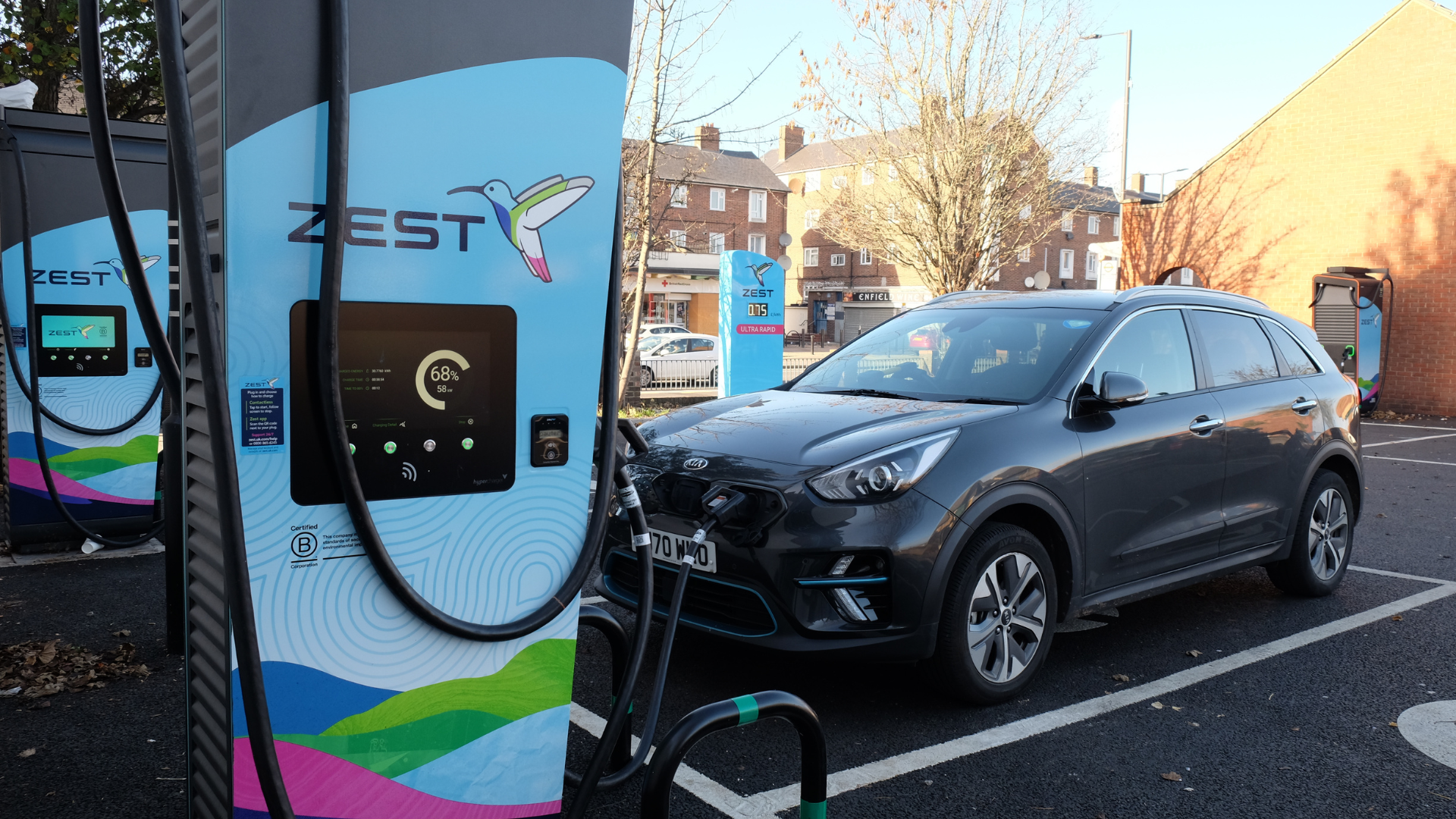
Take my company, Zest. We are one of the fastest growing providers of public electric vehicle charging infrastructure in the UK. Our job is simple: build and operate the infrastructure that allows people to charge electric vehicles in streets, car parks and other public locations.
Yet according to the UK’s official industrial classification system, we are not part of an EV charging industry at all.
Our Standard Industrial Classification (SIC) code is 82990 - “Other business support service activities not elsewhere classified.”
In other words, the infrastructure underpinning Britain’s electric vehicle transition is officially categorised alongside miscellaneous administrative services.
At first glance, this issue may sound like a bureaucratic curiosity. In reality, it exposes a structural gap in how the UK understands one of the fastest growing parts of its energy and transport system.
SIC codes are the framework through which government defines sectors of the economy. They shape how the Office for National Statistics collects data, how policymakers analyse industries and how industrial strategy is designed. If a sector does not have a clear classification, it becomes difficult to measure, difficult to analyse and difficult to manage strategically.
Operators are currently scattered across unrelated categories such as electricity trading, retail fuel sales, transport services and generic business support. The result is that the economic footprint of public EV charging is fragmented across datasets and largely invisible in official statistics.
The issue matters because the sector is scaling rapidly and becoming a material part of the UK’s energy system.
By 2030, public EV charging infrastructure is projected to consume between 8 and 15 terawatt hours of electricity each year, larger than sectors such as paper, glass and cement, and broadly comparable with the UK steel industry in electricity demand.
The UK is already preparing the next revision of its industrial classification system. The forthcoming revision presents an opportunity to recognise public EV charging as a distinct sector.
Creating a dedicated SIC code would not commit government to subsidies or new regulation. It would simply recognise the industry for what it already is: a growing piece of the modern energy and transport economy.
As Britain electrifies transport, recognising the sector building the charging network would be a small but essential step towards a coherent national strategy.
%20(1).jpg)



.png)