EV Charging Business Models: Revenue & Profitability Analysis
.jpg)

The UK's transition to electric vehicles is accelerating at an unprecedented pace. Over 1.75 million battery electric vehicles now travel on UK roads, with more than 2.1 million plug-in vehicles in total. New EV registrations hit 19.6% of all new car sales in 2024, climbing to over 22% through 2025.
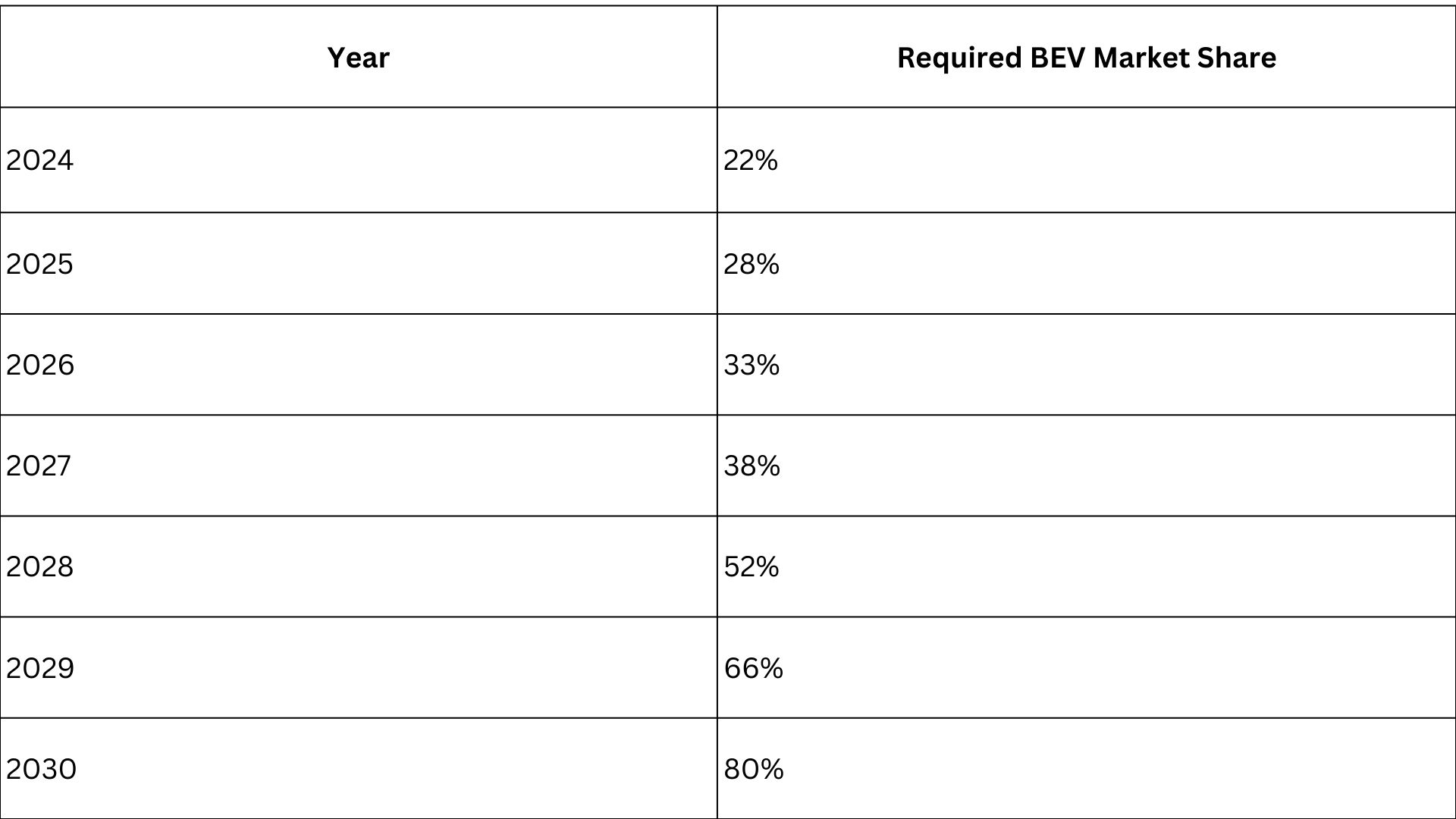
This growth shows no signs of slowing. Industry forecasts from Cox Automotive suggest that BEV market share will reach around 36% by 2028, while the ZEV Mandate sets increasingly ambitious legal requirements for manufacturers. The Labour government has reinstated the 2030 deadline for ending sales of new pure petrol and diesel cars, with hybrids permitted until 2035.
For property owners, this represents a significant commercial opportunity. Whether you own retail destinations, office buildings, leisure facilities, or land suitable for charging hubs, EV charging infrastructure can generate meaningful revenue whilst enhancing the appeal of your assets to a growing demographic of EV drivers. Learn more about the EV opportunity for real estate and commercial landowners.
ZEV Mandate Targets
Understanding the Market Opportunity
The business case for EV charging rests on simple mathematics: the UK currently has over 86,000 public charging devices, yet projections suggest we'll need 300,000 by 2030 to meet demand. This infrastructure gap creates an opportunity for forward-thinking property owners.
Research consistently shows that EV drivers actively seek out destinations with charging facilities. According to CACI research, 68% of consumers who intend to own an EV will visit retailers and businesses more frequently if they provide the right charging facilities. For retail and leisure destinations, this translates directly into increased footfall and spend. Read more about how leisure, retail and hospitality businesses benefit from installing EV charge points.
The charging infrastructure market is supported by substantial investment. The government-sponsored Charging Infrastructure Investment Fund (CIIF), a £420m public-private fund backed by HM Treasury through UK Infrastructure Bank, has been instrumental in scaling charging networks across the UK.
Business Model Options
Property owners typically have four main options when considering EV charging infrastructure. Each carries different risk profiles, capital requirements, and revenue potential. For a deeper dive into commercial property considerations, see our guide to maximising returns with EV charging in commercial real estate.
Comparing the Four Models
.jpg)
1. Ground Rent Model
Under this arrangement, a charge point operator (CPO) pays you a fixed monthly fee per charging bay to use your land. The CPO handles all capital expenditure, installation, operation, and maintenance.
Prime retail locations command higher rates than secondary sites.
Advantages:
- Predictable, guaranteed income from day one
- Zero capital outlay required
- No operational or maintenance responsibility
- No exposure to technology obsolescence
Disadvantages:
- Fixed revenue regardless of utilisation
- No upside from growing EV demand
- Less control over pricing and customer experience
2. Revenue Share Model
Revenue share arrangements give property owners a percentage of charging revenue rather than fixed rent.
Advantages:
- Income grows as utilisation increases
- Aligned interests with operator success
- No capital outlay required
- Benefits from rising EV adoption over time
Disadvantages:
- Variable and less predictable income
- Quiet periods mean lower payments
- Revenue depends on the operator's pricing strategy
3. Managed Service
Some operators offer managed service arrangements in which they fund, install, and operate the infrastructure whilst you retain greater control over pricing and the customer experience. Revenue splits tend to be more favourable to property owners under these arrangements, though the specifics vary considerably between providers.
4. Capital Purchase
Property owners who prefer direct ownership can purchase and install their own charging infrastructure.
Installation Cost Guide
.jpg)
Direct ownership maximises potential returns but requires capital investment, ongoing maintenance responsibility, and exposure to the risk of technology obsolescence. Most property owners without specific EV charging expertise find that partnering with established operators delivers better risk-adjusted returns.
Revenue and Profitability Analysis
Understanding the economics of EV charging helps property owners evaluate which business model suits their circumstances.
Current Charging Prices
.jpg)
Wholesale electricity costs for commercial sites typically run around £0.35/kWh, though this varies with contract terms and market conditions. The margin between wholesale costs and retail charging prices funds infrastructure investment, maintenance, and operator returns.
Factors Affecting Utilisation
Location quality matters enormously for the success of charging infrastructure. The following factors typically drive higher utilisation:
- Dwell time alignment — chargers at destinations where people naturally spend 30+ minutes perform better
- Visibility — clearly signed, easy-to-find charging bays attract more users
- Local EV adoption — areas with higher EV penetration see faster ramp-up
- Competition — sites in areas underserved by existing infrastructure benefit from less competition
- Accessibility — 24/7 access and easy parking layouts encourage usage
New charging locations typically see modest utilisation initially, building over 12-24 months as local EV drivers discover them. Realistic financial models should account for this ramp-up period.
Profitability Timeline
Most charging infrastructure investments require several years to reach profitability. Ground rent and revenue share models transfer this risk to operators; property owners receive payments from day one whilst operators absorb early-stage losses.
For property owners considering direct investment, realistic financial models should assume 3-5 years before installations generate positive returns, with significant ongoing maintenance and technology upgrade costs.
Case Studies: What Success Looks Like
Several high-profile deployments demonstrate the scale of opportunity for well-positioned properties. You can explore all Zest charging station locations on our interactive map.
Deployment Summary
.jpg)
Metrocentre, Gateshead
The Metrocentre retail and leisure complex now offers customers 56 charging sockets across three car parks [13]. This makes it one of the most extensive EV charging facilities in the North East. Zest invested approximately £500,000 in the deployment, providing both fast chargers (aligned with typical shopping dwell times) and rapid chargers for visitors needing quicker turnaround.
Read the full story: Zest opens major new EV infrastructure with Metrocentre
Merry Hill, West Midlands
The Merry Hill shopping centre features 64 charging sockets installed by Zest, another top-10 UK retail destination demonstrating the scale that major shopping centres can achieve.
Read the full story: Merry Hill leads the West Midlands with new EV infrastructure
University of Warwick
In the education sector, the University of Warwick has completed a £1.3m deployment of 142 EV charging spaces across 14 campus locations, representing one of the largest university charging networks in the UK. The facilities serve staff, students, and visitors whilst supporting the university's sustainability commitments. The installation is projected to save more than 15,000 tonnes of CO2, equivalent to 69 million miles driven in a petrol car.
Read the full story: Zest completes rollout at the University of Warwick
Find charging across campus including P1 Kirby Corner, P2 Cryfield, and P3 Academic Loop.
Central Co-op Partnership
Retail partnerships demonstrate how charging infrastructure can align with customer behaviour. The Central Co-op partnership provides fast and rapid chargers at convenience store locations, with charging speeds chosen to match typical customer dwell times at their stores.
Read the full story: Zest partners with Central Co-op
%20(2).jpg)
Choosing the Right Partner
Selecting a charging infrastructure partner requires careful evaluation. Learn more about Zest and our approach to partnerships.
Key considerations include:
- Financial stability — Can the operator fund the promised infrastructure and honour long-term commitments? Backing from substantial investors (such as CIIF-supported operators) provides reassurance.
- Technical capability — Does the operator have experience deploying at similar sites? Can they handle the electrical infrastructure requirements of your property?
- Operational track record — What do existing partners say about reliability, maintenance response times, and relationship management? Operators with in-house maintenance teams can typically respond faster to issues.
- Commercial terms — Beyond headline revenue shares or ground rent figures, examine contract length, exclusivity provisions, and termination rights.
- Brand alignment — Will the charging infrastructure enhance or detract from your property's image? Consider design, signage, and how the charging experience reflects on your brand.
Questions to Ask Potential Partners
- How many similar sites have you deployed and what utilisation rates do they achieve?
- What is your average response time for maintenance issues?
- Who handles customer support and how?
- What happens if technology standards change during the contract period?
- Can we see references from existing property partners?
- What flexibility exists to expand or modify the installation over time?
Getting Started
For property owners considering EV charging infrastructure, a structured approach helps ensure you select the right partner and commercial model.
Assess your site's suitability by reviewing electrical capacity and potential upgrade costs, evaluating parking layout and optimal charger placement, considering typical visitor dwell times, and researching local EV adoption rates alongside existing charging provision in your area.
Define your priorities early in the process. Decide whether you value guaranteed income (ground rent), growth potential (revenue share), or maximum control (direct investment). Consider your risk appetite and capital availability, and determine how important operational control is to you.
Conduct due diligence before committing. Speak to existing partners of shortlisted operators, review the operator's financials and backing, and verify their deployment track record and typical timelines.
Ready to explore EV charging for your site? Contact Zest to discuss your requirements or learn about our land acquisition partnerships.
Looking Ahead
The EV charging market will continue evolving rapidly. Key trends to watch include:
- Increasing charging speeds — ultra-rapid chargers now deliver 150kW or more, with 350kW becoming increasingly common
- Vehicle-to-grid technology — parked EVs may eventually feed power back to buildings or the grid, creating new revenue opportunities
- Smart charging — load balancing and demand response capabilities add value for grid operators
- Payment standardisation — contactless payment requirements making charging more accessible
For more on where the industry is heading, read our industry insights for 2025 and key EV trends from 2024.
For property owners who act now, the opportunity is to establish charging infrastructure ahead of mass EV adoption, building customer habits and operational expertise before competition intensifies. Those who wait may find the best locations already committed to long-term operator agreements.
The transition to electric vehicles represents one of the most significant shifts in UK transport infrastructure in a century. Property owners who position their assets to serve this transition stand to benefit from an expanding market for decades to come.
.png)