Delivering a Great EV Charging Customer Experience: The Role of Local Authorities and Charge Point Operators.

Local authorities and charge point operators (CPOs) must work together to ensure that end users have the smoothest charging experience they can - there are lots of moving parts and Zest’s Customer Experience Director, Mark Elliott, outlines the key elements in making this work.
Partnership between local authorities and CPOs
According to Mark, “As EV adoption accelerates, the challenge for local authorities is no longer just infrastructure delivery, it s delivering a consistent, reliable customer experience for residents. This can only be achieved through a strong, aligned partnership with their CPO.
Customer experience in EV charging is co-owned, it’s a shared responsibility. Local authorities define policy, parking allocation and resident engagement. CPOs deliver charger reliability, maintenance and frontline support.”
He went on to explain that “Residents do not distinguish between these roles, that’s why Zest feels it’s also important to support the local authority with resident engagement and to be visible in the community. It’s important that residents experience a single service. Successful programmes therefore depend on:
- Clear governance and accountability
- Shared performance metrics
- Joined-up communications”
Customer experience as the priority
Mark continued to explain that “Residents do not differentiate between service responsibilities and who does what, they care whether charging feels simple, dependable and cohesive. A poor experience undermines trust faster than slow infrastructure rollout. Important requirements are:
· A consistent, resident-focused service
· Easy-to-use, abundant charging”
Reliability, availability and dedicated EV bays
Delving into the reliability and availability of chargers, including the role of dedicated EV bays, Mark outlined: “Reliability and availability matter because residents expect chargers to be available when needed, and for them to be operational and easy to use. This places a high level of focus on high uptime standards, proactive maintenance and real-time network visibility.
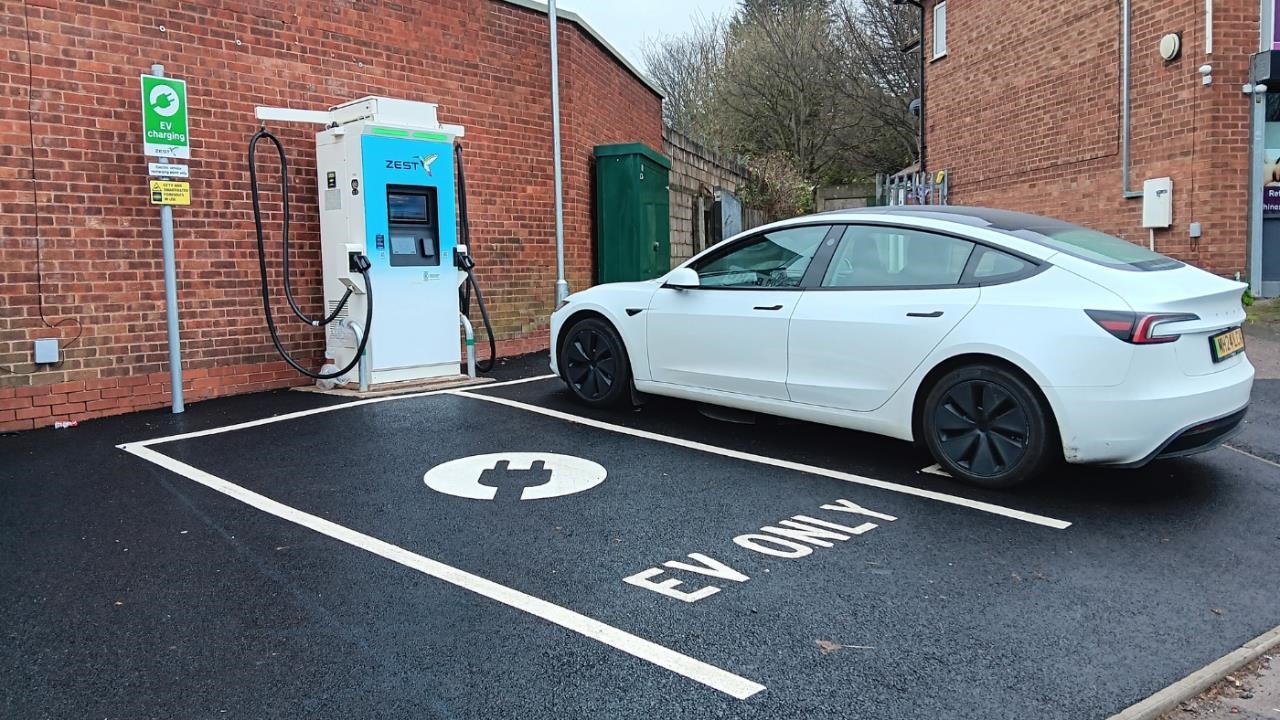
Dedicated EV bays can be contentious, and the introduction of EV bays can create tension, particularly in high-density areas. However, dedicated bays are essential to:
· Prevent charger blocking
· Ensure reliability and usability
· Build confidence in switching to EVs
Without enforcement and protection, infrastructure quickly becomes ineffective. Reliability depends not only on charger performance, but also on making sure bays remain usable in practice.”
Equity and inclusive access
Apart from the reliability of chargers, Mark went on to highlight the challenge of inclusive access for charge point users and communities “A critical challenge is ensuring EV infrastructure reaches underserved communities, not just early adopters. The below are fundamental to enabling inclusive EV adoption:
· Prioritising areas without off-street parking
· Targeting investment where need is greatest
· Embedding fairness into rollout strategies
The key for all this to align is transparent communication, data-led insights, and phased rollout aligned to demand.”
Delivery challenges for councils
According to Mark, local authorities can also come up against operational and logistical limitations, “Local authorities can face significant constraints:
· Competing kerbside demands (parking, active travel, servicing)
· Complex funding and procurement models
· Operational coordination across services
· Managing public perception and behaviour change
Boroughs such as Hackney and Brent are at the forefront of this transition, balancing ambitious decarbonisation targets with the realities of densely populated urban environments, limited kerbside space, and diverse community needs. There is no single solution, only careful trade-offs and strong partnerships.”
Wider social and environmental value
Despite some challenges, Mark highlights the social impact of EV charging, “EV infrastructure, when delivered effectively, is a social value enabler delivering cleaner air and improved public health outcomes. Furthermore, it enables access to EVs for residents without driveways and local economic benefits including jobs, skills and supply chain opportunities. For councils like Brent and Hackney, this aligns directly with broader environmental, health, and equality objectives.”
Success measures
Beyond creating social value, Mark summarised the success measures for an effective delivery, “The most effective authorities demonstrate protected and enforced bays, data-led infrastructure planning supported by the CPO, high-performing accountable CPO partners, resident-focused design and clear social value outcomes embedded from the outset.
The transition to EVs is not just about installing charge points, it is about building trust in a new way of fuelling transport. Ultimately, success will be defined not by the number of chargers installed, but by availability, reliability, utilisation and whether residents feel the service works for them.”
Mark’s insight demonstrates the importance of cohesive EV charging partnerships to deliver a smooth, hassle-free experience for residents. By prioritising availability and reliability of charge points as well as access for underserved communities, local authorities can deliver a great EV charging experience for their residents.
.png)