Retail Rapid Hubs: Real Footfall, Dwell Time and Revenue Impact
%20(4).jpg)

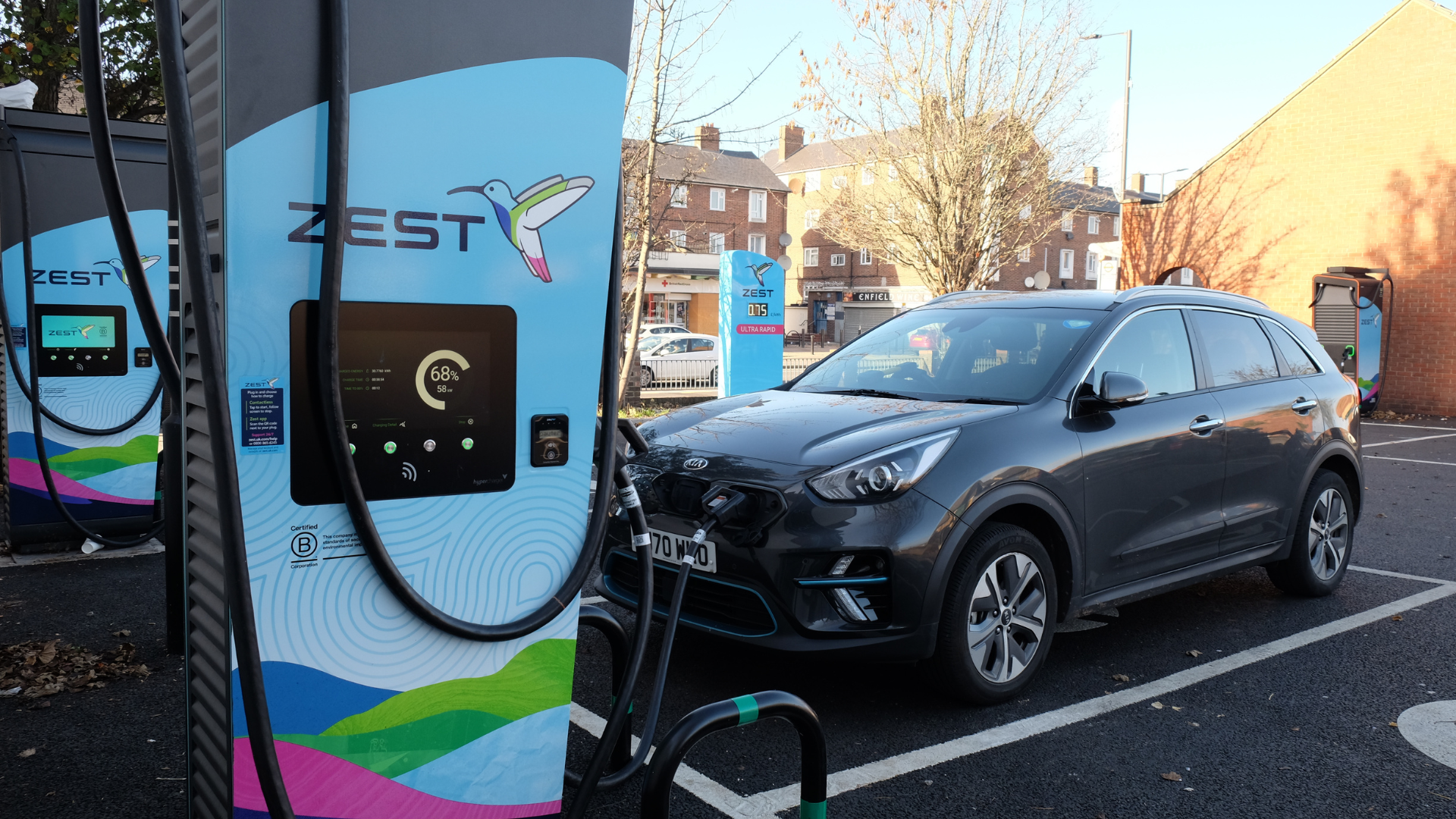
The conversation around electric vehicle charging has shifted dramatically. What started as a compliance exercise or sustainability box to tick has become something far more interesting for retail destinations: a genuine commercial lever.
Shopping centres, retail parks and leisure venues across the UK are discovering that installing EV charge points does more than attract drivers looking for a top-up. It creates a specific type of visitor who stays longer, spends more and returns with surprising frequency.
The Numbers Behind the Hype
Let's cut straight to what matters. Research into click-and-collect and service-visit behaviour offers useful parallels for EV charging scenarios, where customers have a defined reason to visit and a predictable dwell time. While direct studies on EV charging footfall remain limited, the underlying dynamics of structured dwell time translate well.
Research across multiple markets shows that customers visiting retail locations for click-and-collect make additional unplanned purchases at rates between 61% and 85%, according to studies by the International Council of Shopping Centres (ICSC).
Barclays valued the UK click-and-collect economy at £42.4 billion in 2022, representing 8.4% of total retail spending. The mechanism driving this spend applies similarly to charging visits: a customer with 20 to 45 minutes to fill while their vehicle charges behaves very differently from someone dashing in for a single item.
The charging session creates what retailers call "structured dwell time", where customers know exactly how long they have and plan their activities accordingly. A CEBR (Centre for Economics and Business Research) study found that EV drivers spend up to 38% more per visit at businesses where they can charge their vehicle.
Why Charging Customers Behaves Differently
Understanding why EV drivers represent such valuable footfall requires looking at the psychology of the charging visit. Unlike a quick errand, charging creates a window of committed time. The customer cannot leave early even if they wanted to, which removes the usual time pressure that limits browsing.
This produces several measurable behaviours in analogous service visit scenarios:
- Customers explore stores they would normally walk past
- Food and beverage spending increases substantially during longer sessions
- Click and collect orders are frequently combined with charging visits
- Family members accompanying the driver multiply the spending opportunity
- Repeat visits establish habitual shopping patterns at the destination
ICSC research tracking 41 million card transactions found that customers making service visits generated $131 in additional in-store spending within 15 days of a $100 online transaction. Over 30 days, that figure rose to $171 in net additional spend. These US figures demonstrate the halo effect of service-driven visits, though UK-specific data may vary.
With UK EV adoption accelerating (over 2.8 million plug-in vehicles now on UK roads), forward-thinking retail destinations are positioning themselves to capture this growing customer segment. According to Zapmap's market data, fully electric cars represented 23.4% of new car registrations in 2025, up from 19.6% in 2024.
Attribution Models: Measuring Destination Charging Value
For commercial venues serious about understanding their EV infrastructure investment, proper attribution modelling separates the genuine uplift from noise in the data.
The most robust approaches combine three data sources:
Session data captures when vehicles connect, the charge duration, and the energy delivered. This establishes the baseline of charging visits and their timing patterns.
Anonymised POS data from on-site retailers, matched by timestamp windows, reveals spending patterns during and immediately following charging sessions. Privacy compliant matching uses time proximity rather than individual identification.
Footfall counters at store entrances show whether charging visitors enter retail units at higher rates than general car park users.
Venues like Merry Hill, Chantry Place, Norwich and Frenchgate, Doncaster have rolled out comprehensive charging infrastructure precisely because the destination charging value proposition stands up to financial scrutiny.
Bay Allocation: Getting the Maths Right
Not all charging bays deliver equal commercial value. The allocation decision involves balancing several competing factors that determine overall return on investment.
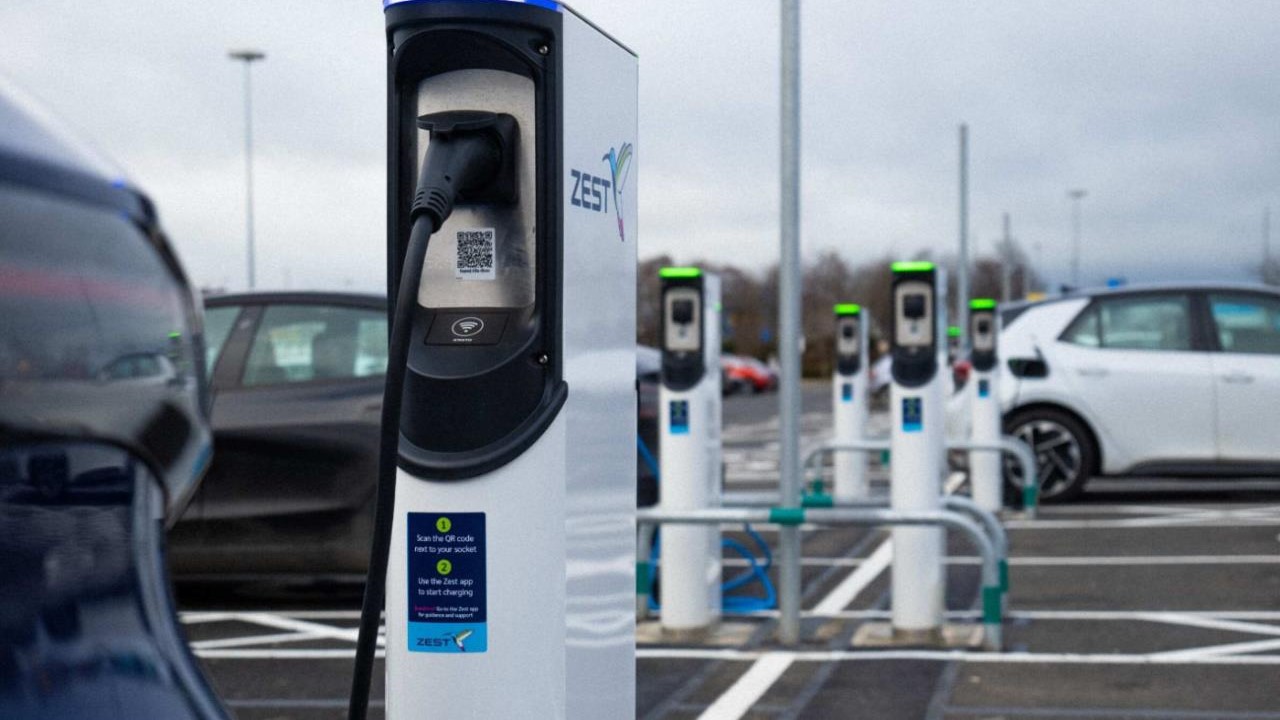
Rapid versus fast charging creates different dwell profiles. Rapid chargers (50kW plus) deliver 20 to 40-minute sessions, ideal for food courts and quick-service retail. Slower AC charging suits destinations where two- to three-hour visits are regular, such as cinemas or large-format retail. Understanding how EV charging works helps inform these decisions.
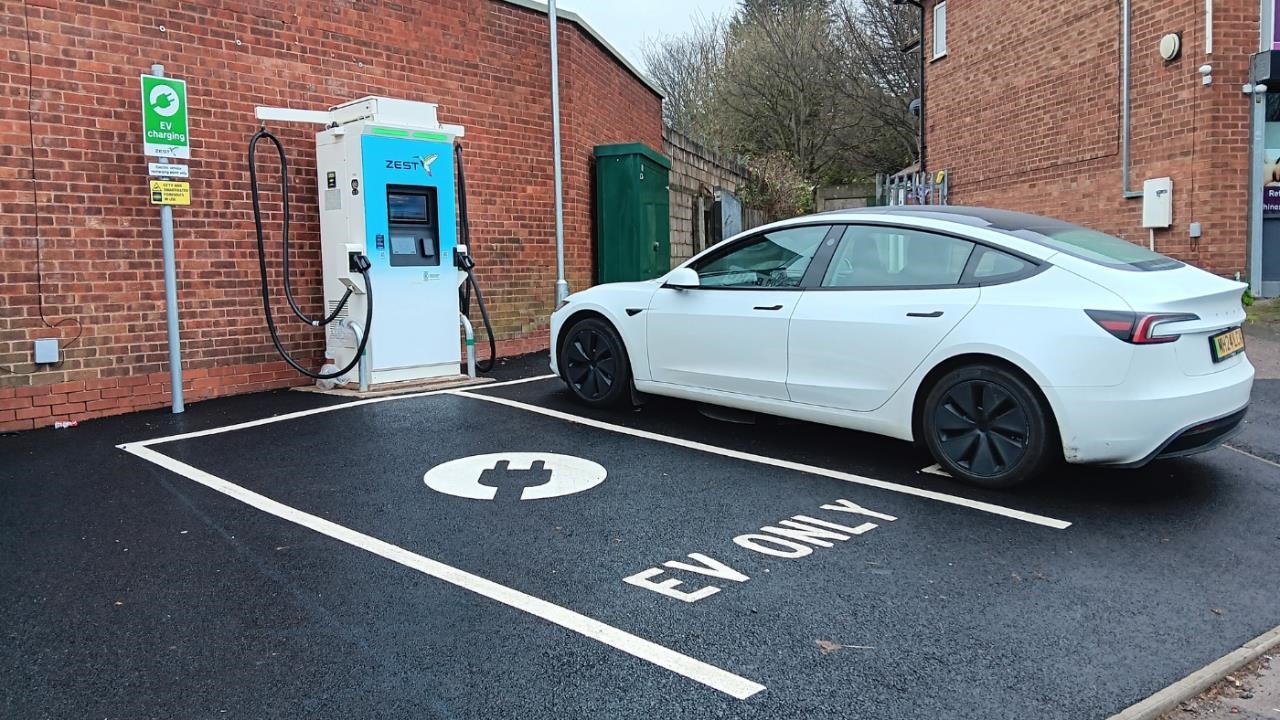
Proximity to entrances matters more than you might expect. Charging bays positioned to require customers to walk past retail frontages can generate higher conversion than isolated locations at car park perimeters.
Visibility from main routes serves a dual purpose. Drivers actively seeking charging spots will choose visible locations, while the presence of EV infrastructure signals to all visitors that the destination is forward-thinking and well-maintained.
Drax's research on retail parks recommends that one in ten retail park parking spaces need EV chargers to meet current demand, rising to three in ten by 2030.
The Landlord Perspective
Shopping centre owners and retail park landlords increasingly view EV charging as essential infrastructure rather than an optional amenity. Industry research consistently shows that click-and-collect and service visitors spend additional money during their visits, with ICSC data indicating that 61% to 85% make unplanned purchases.
This insight applies directly to charging visitors. The commercial real estate opportunity extends beyond charging revenue to tenant performance, rental negotiations, and asset valuation.
Vacancy rates at well-invested retail destinations have fallen to multi-year lows, with Unibail Rodamco Westfield reporting a 4.8% vacancy rate across its portfolio in 2024, the lowest since 2017. Destinations offering comprehensive EV infrastructure attract digital-first retailers with strong omnichannel capabilities, the exact tenant profile most landlords are pursuing.
Savills' research on the EV charging market notes that retail parks benefit from rapid and ultra-rapid chargers that align with typical shopping dwell times, with some landlords seeing returns of up to £10,000 per bay per annum.
The UK Charging Infrastructure Context
The UK now has over 70,000 public EV charging devices across more than 35,000 locations, with a new charging device installed roughly every 45 minutes. Rapid and ultra-rapid chargers are growing at 35% annually, faster than the overall network growth rate.
For retail destinations, this growth creates both opportunity and competitive pressure. According to CACI research commissioned by Zest, 82% of EV owners said an improved charging experience would encourage them to visit one centre over another.
The government's Zero Emission Vehicle mandate requires manufacturers to increase EV sales to 80% by 2030, meaning the pool of charging customers will grow substantially. Strategic EV infrastructure planning now positions destinations to capture this demand before habits are fully set.
What This Means for Your Venue
The evidence points clearly toward EV charging infrastructure as a driver of footfall with a measurable revenue impact. Venues treating charging as a grudging necessity rather than a commercial opportunity are leaving money on the table.
The destination charging value case rests on three pillars. First, attracting a specific customer segment with a higher propensity to spend and second, creating structured dwell time that converts to additional purchases. Third, building repeat visit patterns that compound over time.
For brands and destinations evaluating their EV strategy, the question has shifted from whether to invest to how to maximise the return. Understanding the full opportunity requires looking beyond kilowatt-hours delivered to the broader commercial ecosystem that charging infrastructure enables.
The retailers and destinations getting this right today will own the customer relationships that matter most as EV adoption accelerates through the rest of this decade. With leading retail destinations already partnering with charge point operators to create seamless charging experiences, those who delay risk falling behind competitors who have already established themselves as part of EV drivers' routines.
.png)